
The Last Gasp
my last reads in 2025

#101 in 2025
Stupid things can happen before you go on a transatlantic trip. A friend of mind threw her passport and tickets into the mailbox while she was waiting for her airport limo. They could not be retrieved in time. Other friends went to the airport not knowing that their passports had expired or that they should have applied for a visa weeks ago. Those trips got cancelled, too.
For these reasons the very first pages of A Guardian and a Thief by Megha Majumdar put me in a state of high anxiety. Set in Kolkata, India, at the time of a climate crisis, a mother and her toddler plus the grandfather collect their precious visas which will let them escape to Michigan. Ripping yourself away from home is bad enough. When the mother’s purse is stolen along with all their documents, a week of despair begins. In this world where a cauliflower can lead to a life-or-death brawl, and where a tarpaulin is the only home a family finds, formerly kind people turn into vicious fighters. Majumdar shifts her sympathies and yours as she asks who is the guardian, who is the thief.
He now lived in a world in which old men stole fruit from children. He had brought into being such a world.
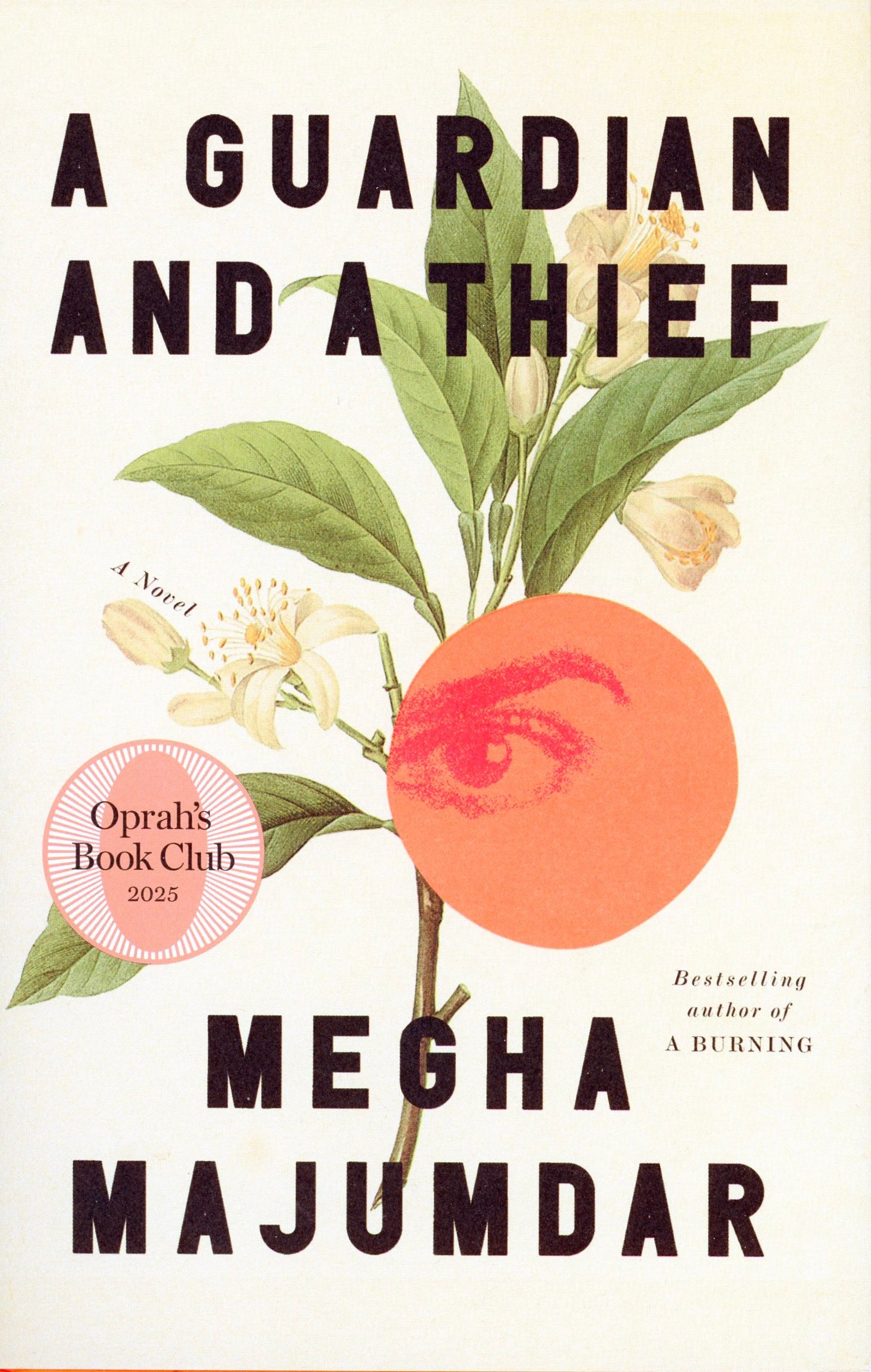
Hope for the future was no shy bloom but a blood-maddened creature, fanged and toothed, with its own knowledge of history’s hostilities and the cages of the present. Hope wasn’t soft or tender. It was mean. It snarled. It fought. It deceived.
This book was a gift from someone who said it would break my heart. It did, it does.
#102 in 2025
Aleksandar Hemon is one of my favourite writers and it’s not just because he wrote a book with the name Bruno in it. Hemon selected the stories in Best European Fiction 2010 and they do not disappoint. The stories are arranged by country from A to Z, though why Russia is included, I do not know. The UK gets three whole spots: England/Scotland/Wales. Inga Ābele is the Latvian representative so it’s not a surprise that her story, like the Lithuanian one, involves cemeteries. We like cemeteries.
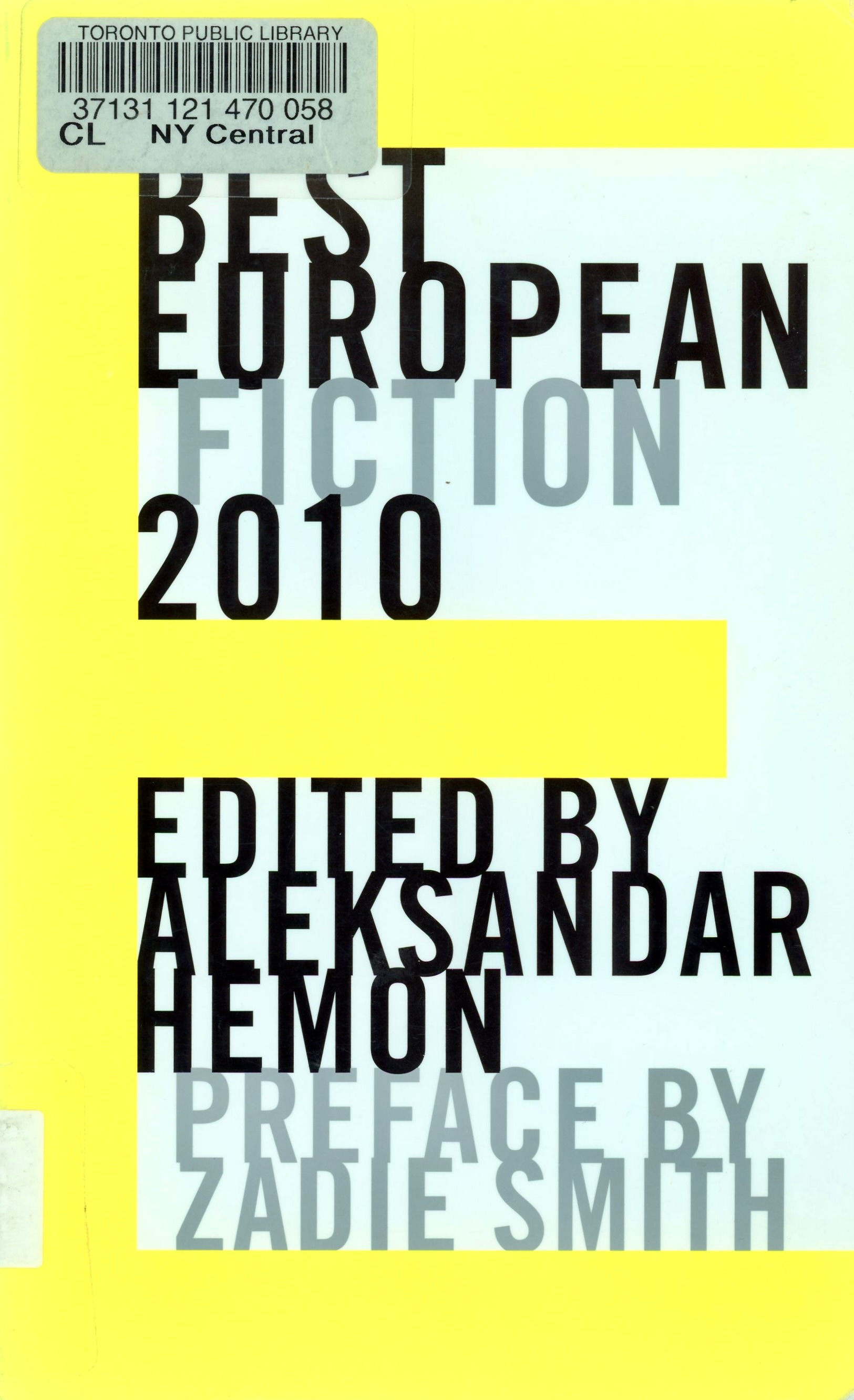
It turns out that Albania is a country where no one ever dies and that the soccer player Zidane is melancholic. The writers include mini-essays about their identities and opinions split between those who say they are European and those who say their identities have no basis in ethnicity. This reader doesn't really care. The great thing about Hemon’s choices is that a. you find out about new writers and b. you can always skip some.
If I had urinated immediately after breakfast, the mob would never have burnt down the orphanage. (Ireland:English)
At one moment, even before it began, the story was out on the edge of town. (Serbia)
#103 in 2025
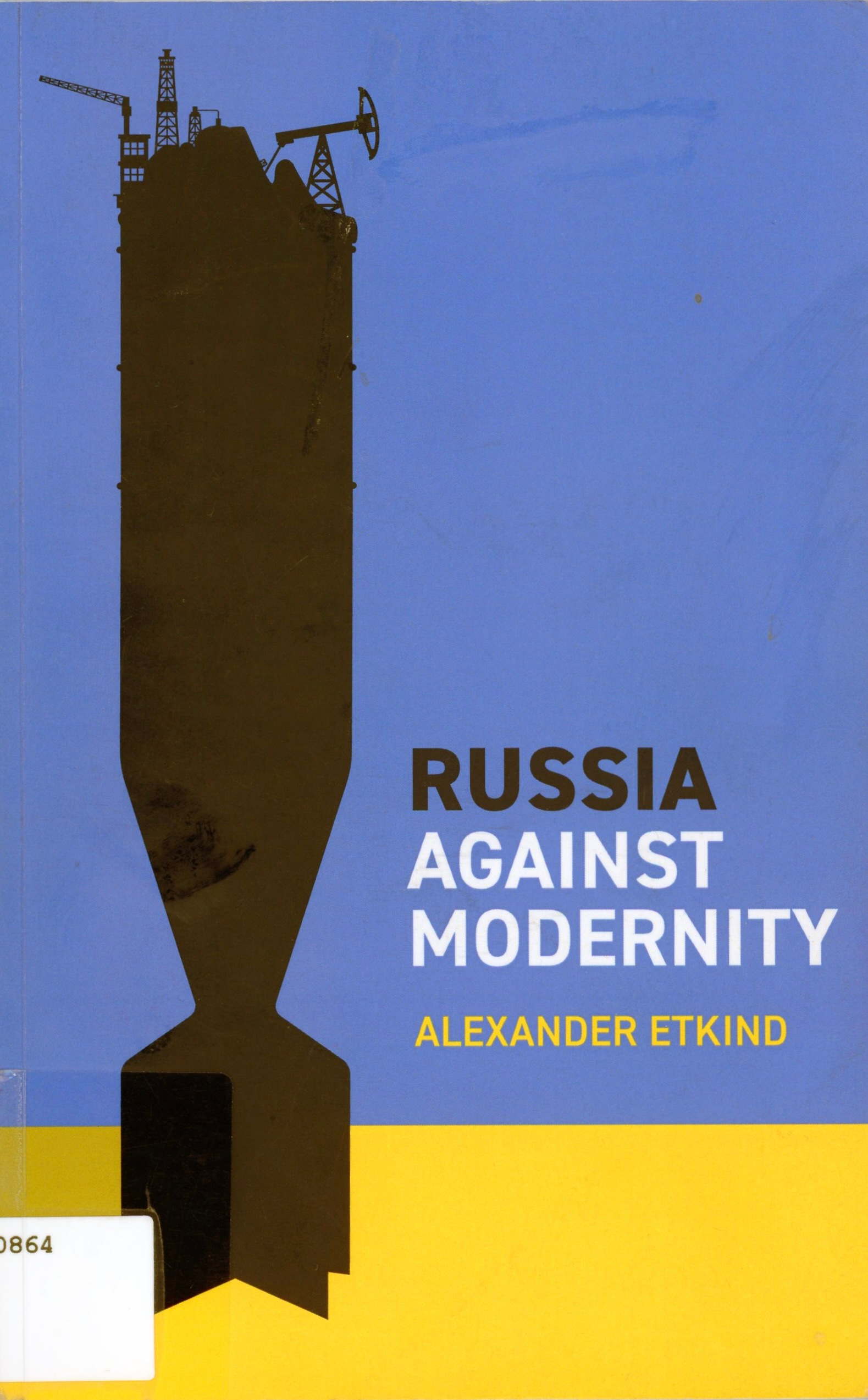
Putin’s war was a “special operation” against the Ukrainian people, their statehood and culture. It was also a broader operation against the modern world of climate awareness, energy transition and digital labor.
Alexander Etkind’s Russia against Modernity is a lean screed against the regressive nature of today’s Russia. Few authors have made Russia’s dependency on climate-damaging industries as clear as Etkind does, as well as pointing out how the generational divides — the gerontocracy & the babushkas — effectively suppress nascent protests against the system. The political regime that launched the war against Ukraine is as old as the one that ruled in the last years of the Soviet Union. Take hope from that. Recently I read of a conspiracy theory (from Lyudmila Petrushevskaya, a Russian playwright) that Putin actually died a few years ago and we’re witnessing his surrogates. Whatever the truth is about this parasitic state, Etkind’s book is a bracing and infuriating discussion of its crimes against the future. It was written shortly after the Russian invasion of Ukraine in 2022, and assumes Donald Trump’s collusion with Russia as a given fact.
With authoritarians at the helm, it is their idiosyncratic preferences — aesthetic tastes, cultural and sexual prejudices, historical views and ethnic stereotypes — that shape social structuration and dictate the policies of the realm.
Textiles, gadgets and even weapons can be purchased abroad. But safe parks, clean beaches and good schools are not available for import.
#104 in 2025
It’s 1988, and you’re visiting Soviet Latvia, getting to know the scene, hopping from shows to parties, and you often see a beefy guy, smoking in a corner, looking sullen and angry and drunk. Little do you know he is a local hero and even less do you know why. That guy was artist Hardijs Lediņš who happens to have been the driver of a major cultural upheaval in the USSR.

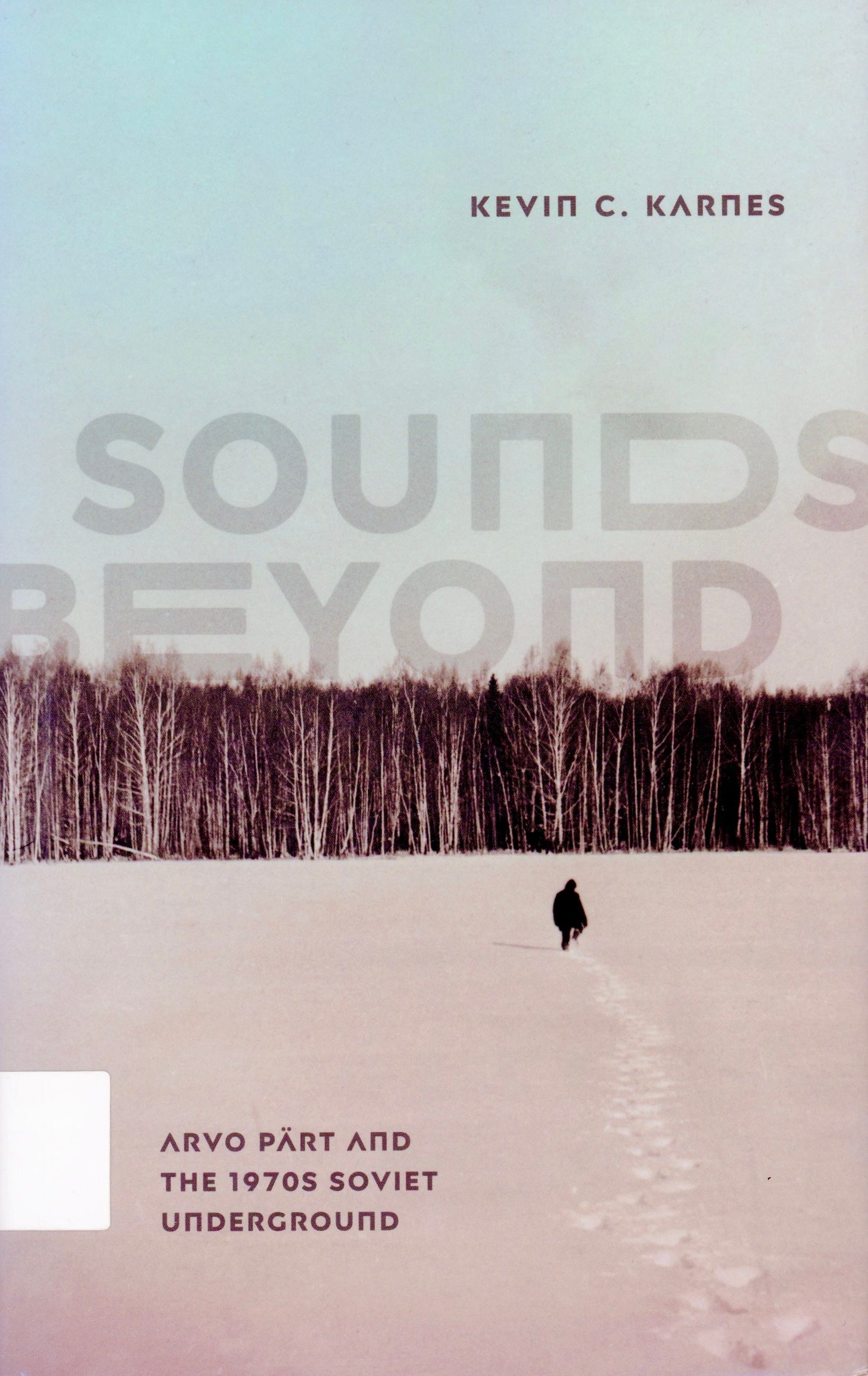
Sounds Beyond: Arvo Pärt and the 1970s Underground by Kevin C. Karnes puts Lediņš at the centre of this book, a study of the Estonian composer Arvo Pärt, and should you not know who that is, you’ve probably heard a rip-off of his music in some film score by now. When I first heard Pärt on the radio, I was so affected by it that I had to pull the car over to listen to the whole piece.
Karnes does a great job of describing the artistic scene that thrived beneath the radar in Brezhnev’s Soviet Union and how artists lived in the gaps of a regime that seemed eternal. While still an architecture student, Hardijs Lediņš organized discos that played British and West German progressive rock, jazz, classical and avant-garde music at the Student Club of the Riga Polytechnic Instute between 1974 and 1976. A fan of King Crimson, John Cage, and Stockhausen, the young upstart had the guts to premiere Pärt’s music. It was daring because the compositions were deeply religious and therefore anti-Soviet. Eventually the apparatchiks caught up with them, despite the fact that Lediņš’s mother worked for a KGB front, the Committee for Cultural Relations with Compatriots. Nevertheless, the man never stopped looking for those gaps. Whether you love Pärt or Lediņš, Karnes’s book reads easy and anyone interested in the Baltics, music, art as resistance, or performance art will enjoy it. It’s an academic monograph, so it might be hard to buy. Go to the library.
#105 in 2025
The scratch marks on the ring may indicate use of force, or that Vitric refused to remove it when doing the dishes.
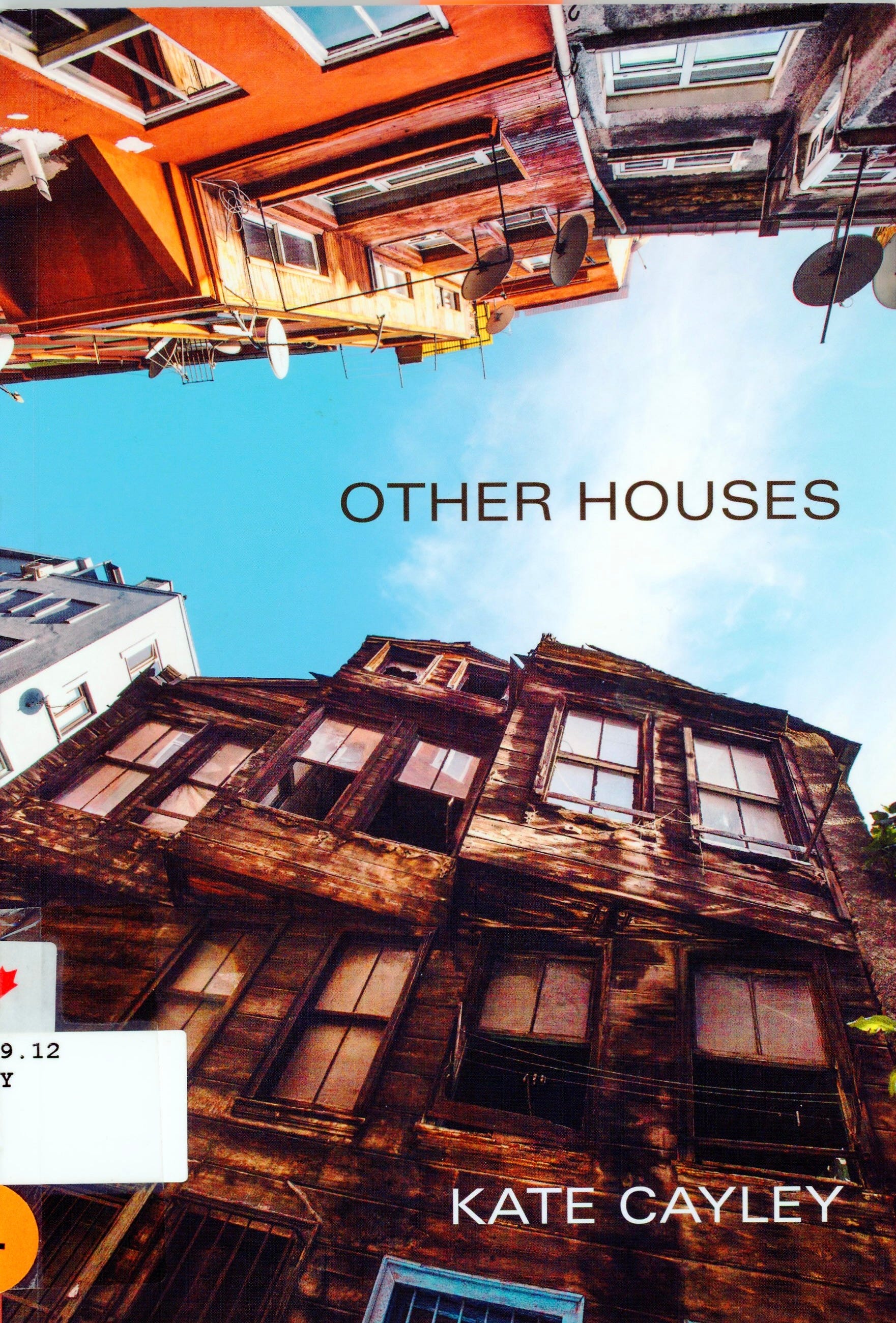
What better way to end the year than with the writing of Kate Cayley (the third book of hers I read this year, sheer coincidence). Good Will to All permeates this collection of poems called Other Houses, even when the tone is melancholic. Cayley also writes for the theatre and the subjects of her poems could easily grow into plays, such as Hans Christian Andersen Becomes Acquainted with His Shadow; Arthur Conan Doyle and Harry Houdini Share Breakfast; Antoni Gaudi Looks at a Leaf while Designing the Sagrada Familia. Also there’s a series of poems about people who have claimed to be Christ.
There’s a long history of poets being shot but not of being murdered right after they dropped their child off to school. The death of Renee Nicole Good gutted me. Read a poem or ten in her honour.
*
Currently reading: Colm Toíbin, The Magician
Books I abandoned:
Great premise for somebody not me: Janne Teller, Nothing, 2010
Great premise, overwritten: Sigrid Nunez, The Last of Her Kind, 2005
*
NEW LIST
Featured Author: Sigrid Nunez, Salvation City, 2010 (a pandemic novel)
Second Latest Title Saved: Peter Stamm, In Strange Gardens, 2006 (included in Best European Fiction 2010)
Reader Recommended: Colm Toíbin, The Magician, 2021 (fictionalised biography of Thomas Mann; thank you, Jim)
Oldest Title on the List: Claudia Rankine, The White Card, 2019 (a play)
The Random List:
Rabih Alameddine, An Unnecessary Woman, 2013 (a novel set in Beirut)
Ann Schmiesing, The Brothers Grimm: a biography, 2024 (those folk tale guys)
Andrea Dworkin, Heartbreak: the political memoir of a feminist militant, 2002 (feminism always breaks your heart)
Andrea Dworkin, Right-wing women, 2025 (first published in 1983; double dose of Dworkin)
José Saramago, Blindness, 1998 (Portuguese novelist, should have read it ages ago)
V. M. Zubok, Zhivago’s Children: the last Russian intelligentsia, 2009 (why the last, you may well ask)
How I make my lists, a refresher.
Covid made me read more seriously. Then I became bored of my reading choices. I decided to create a system based on chance. I wrote down any book someone recommended or mentioned, whether in person, in a review, in a story, or even from the list of a publishing house, those lists at the back of some books, know what I mean? I was much aided by the Toronto Public Library system, which lets you create endless digital lists of saved books. The library portal shows you your most recent 2,000 titles, but you can collect as many as you want.
Every 600 titles or so, I printed out what I had collected. Let’s say I now have seven batches of book lists. That’s where my arbitrary system of selection begins.
Oldest Title on the List means I'm looking at titles from the very first list I started in 2022. That list was 22 pages long; working through it sequentially, I'm now on page 20.
The Random List is pulled from the other batches, The six titles in the current list come from a batch I collected this year. The titles are random because I’ll take one that landed at the top of a page and one from the bottom. That’s why sometimes the same author gets chosen — drawing from this latest batch, Dworkin appeared on the bottom of page 2 and also on the top of page 3.
When a book arrives at the library, I read the first page or so. If I think I’ll hate it, I remove it from the list, and try the next title on that page.
Second Latest Title Saved could be a book I noted an hour ago, just not the most recent one.
Featured Author. I like working my way through an author’s oeuvre. I read all of Maggie O'Farrell of Hamnet fame; not all, but a goodly amount of Percival Everett; nearly all of Colette; all of Chimamanda Ngozi Adichie, and now it’s Sigrid Nunez.
Reader Recommended are titles my bookish friends suggest I absolutely must read. I work my way through those suggestions chronologically. The list is not short anymore.
Also. I read a lot of books that are not on these lists. Books I badly want to read; books I pick up at someone’s launch; books nominated for the international Booker; books that are part of my ongoing research. The value of the list game, for me, is that it will put books in my hands that I wouldn't choose of my own accord. I find so many surprises. The game wouldn't be fun though if I didn't give myself permission to quit reading a book at any time, whether it’s after the first sentence or on page 200.
That’s how my reading game works. Thank you for joining me.
Move Blindness by Saramango up to the top of the list--it's unforgettable